


Paint Correction6 Min Read
What Is Paint Correction And Does Your Car Need It
How correction removes a defect instead of filling it, and how to tell if your paint needs it.
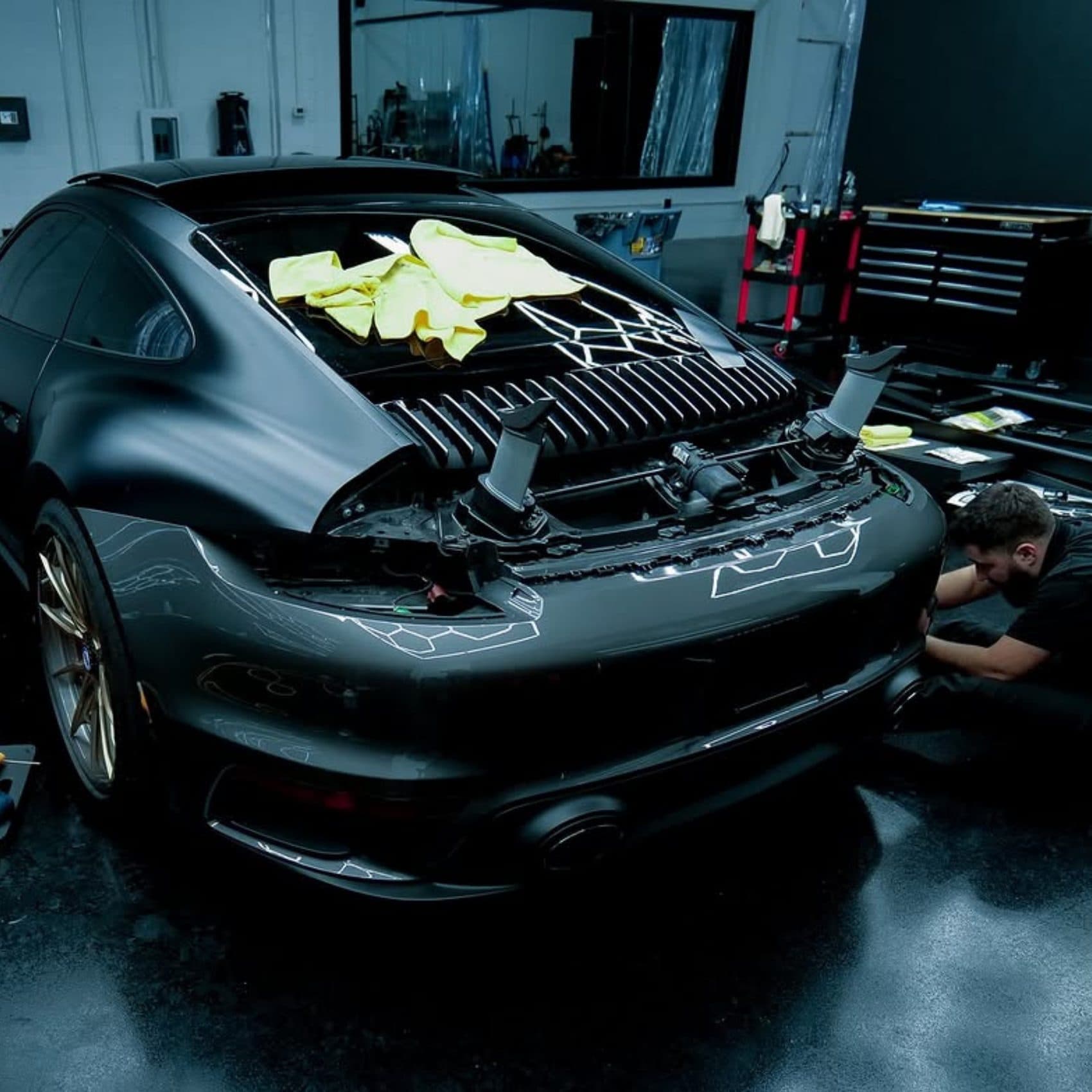
Paint correction is machine polishing that removes defects from the clear coat rather than hiding them. It is the difference between paint that reflects cleanly and paint that looks flat and grey in daylight.
It is also the most misunderstood service in detailing, largely because a lot of what is sold under the name is not correction at all.
What It Physically Does
Your car's colour sits under a transparent clear coat, typically around 40 to 50 microns thick. Almost every visible defect on an ordinary car lives in that top layer: wash swirls, light scratches, buffer trails, oxidation and haze.
Correction levels a small, controlled amount of that clear coat with a machine polisher and an abrasive, until the surface sits below the bottom of the defect. At that point the scratch does not exist any more. It is not filled, covered or disguised.
Correction Versus A Glaze
A glaze fills defects with oils. It looks superb straight away and it is fast, which is why it turns up in cheap packages sold as cut and polish.
Then the fillers wash out, usually within a few weeks, and the swirls are exactly where they were. If a quote for correction seems surprisingly cheap or surprisingly quick, this is almost always why.
Does Your Car Actually Need It
Park in direct sunlight and look across a horizontal panel at a low angle. If you can see fine circular scratches radiating out from the reflection of the sun, that is swirl marring and correction will remove it.
Then run a fingernail across any individual scratch that bothers you. If it glides over, correction will take it out. If it catches, the scratch has gone through the clear coat and only refinishing will remove it.
How Many Stages
| Approach | What It Does |
|---|---|
| Single stage polish | Removes most swirls and lifts gloss noticeably. Right for most daily drivers. |
| Two stage, cut then refine | Cuts harder to remove deeper marring, then refines the haze cutting leaves behind. |
| Multi stage | Chases the last few percent. Slow, and takes the most clear coat. |
More stages is not automatically better. Each one takes clear coat off a finite layer, so the right approach is the least aggressive one that gets the result you actually want.
Why It Matters Before A Coating
A ceramic coating is transparent and it bonds to whatever is underneath it. Applied over swirled paint, it locks those swirls in for as long as the coating lasts.
That is why correction comes before coating in any properly quoted job, and why a coating quoted without any correction stage should be questioned.
Send a couple of photos of the paint taken in direct sunlight and we will tell you what stage your car needs, including when the honest answer is that it does not need correction at all.